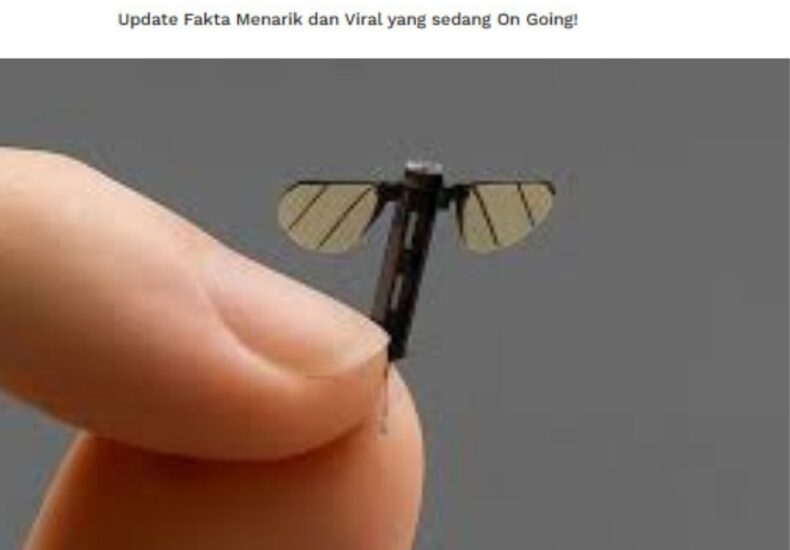
China unveils mosquito-sized microdrone for battlefield reconnaissance
China mosquito-sized microdrone technology has drawn global attention after Chinese researchers unveiled a tiny drone designed for battlefield reconnaissance. Comparable in size to a mosquito, this microdrone represents a significant leap in miniaturized military surveillance systems. From the outset, the development highlights China’s rapid progress in combining artificial intelligence, robotics, and advanced materials.
A Breakthrough in Miniaturized Drone Technology
First and foremost, the China mosquito-sized microdrone stands out due to its extremely small form factor. Despite its size, the drone is reportedly equipped with miniature sensors, cameras, and wireless communication components. As a result, it can operate discreetly in complex environments where traditional drones would be easily detected.
Moreover, the drone’s insect-like appearance allows it to blend into natural surroundings. Consequently, this design enhances its potential for covert observation during reconnaissance missions.
Designed for Battlefield Reconnaissance
Equally important, the primary role of the China mosquito-sized microdrone is battlefield reconnaissance. Its compact size allows it to enter confined spaces, such as buildings or dense urban areas. Therefore, it can collect visual intelligence without drawing attention.
Additionally, the drone is expected to support real-time data transmission. This capability enables operators to receive immediate situational awareness, which is critical in modern warfare scenarios. As warfare increasingly relies on information superiority, such microdrone systems may play a vital role.
AI and Advanced Engineering at the Core
Furthermore, artificial intelligence is believed to be central to the drone’s functionality. AI algorithms may assist with autonomous navigation, obstacle avoidance, and stable flight. Meanwhile, advanced materials help reduce weight while maintaining structural durability.
At the same time, power efficiency remains a major engineering challenge. However, ongoing research suggests improvements in micro-batteries and energy management systems could extend operational endurance.
Global Implications and Ethical Concerns
Meanwhile, the unveiling of the China mosquito-sized microdrone has sparked international discussion. On one hand, it showcases technological innovation. On the other hand, it raises ethical and security concerns related to privacy and military escalation.
As a result, defense analysts are closely monitoring how such microdrone technologies might influence future conflict dynamics. In particular, their potential use in intelligence gathering could redefine surveillance norms.